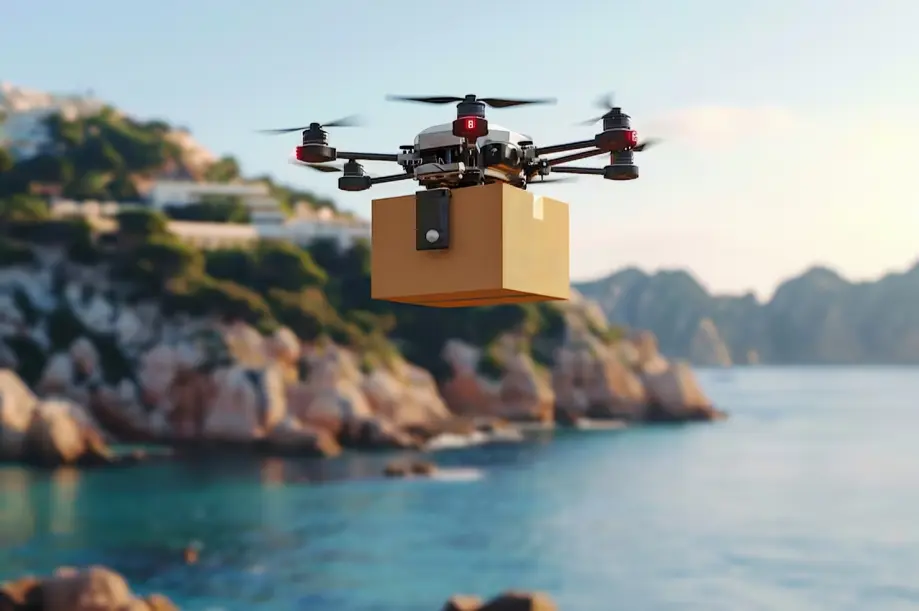
The logistics industry is entering a new era. As businesses look for faster, smarter and more flexible ways to move goods, technology is opening up possibilities that were once limited to science fiction. One of the most talked-about developments is drone delivery.
From small parcels and urgent supplies to deliveries between warehouses and industrial sites, drones are being explored for a growing range of logistics applications. By taking selected deliveries away from congested roads and into the air, the technology could offer businesses an alternative way to move goods quickly and efficiently.
However, drone delivery is not about replacing every van or lorry on the road. Instead, it is about finding the right role for aerial transport within a wider, connected logistics network.
A New Way to Move Goods
Drone delivery uses unmanned aircraft to transport goods from one location to another without a pilot travelling onboard. Depending on the application, a drone could carry a parcel from a distribution facility to a designated delivery point, transport supplies between business premises or reach locations where conventional road access is difficult.
A typical journey involves preparing and securing the goods, loading them onto the drone and following a planned and authorised flight route. The delivery can then be completed at an appropriate landing area, drop-off point, secure locker or other designated location.
The key difference is the route itself.
Instead of navigating roads, junctions and traffic, drones can travel through the air along carefully planned routes. For certain deliveries, this could create a more direct and potentially faster connection between two locations.
Why Are Businesses Looking at Drone Delivery?
The pressure on modern logistics networks continues to grow. Customers expect quicker deliveries, businesses need greater supply chain flexibility and road congestion can make the final stage of a journey increasingly challenging.
Drones offer another potential option.
They are particularly suited to situations where the delivery is relatively lightweight, time-sensitive or difficult to reach using conventional transport. Rather than using a full-sized vehicle for every journey, businesses could eventually use different forms of transport according to the needs of each delivery.
This approach could make logistics networks more adaptable while helping businesses respond to changing delivery demands.
Where Could Drone Delivery Make a Difference?
The potential applications of drone technology extend well beyond online shopping and doorstep parcels.
Faster Last-Mile Deliveries
The last mile is often one of the most complicated stages of the delivery process. Traffic, roadworks, parking restrictions and busy urban areas can all contribute to delays.
For suitable parcels, drones could provide a more direct route from a nearby fulfilment or distribution point to an approved delivery location.
This could be particularly valuable when speed matters, such as for urgent business supplies or time-sensitive goods.
Reaching Hard-to-Access Locations
Not every destination is equally easy to reach by road. Rural communities, isolated properties, construction sites and remote facilities may require longer or more complicated journeys.
Drones could potentially provide an alternative route to suitable locations, reducing the reliance on traditional road access for certain types of deliveries.
Supporting Local Distribution
Drone technology could also have a role within regional distribution networks. A drone might transport smaller items between nearby facilities, helping businesses move goods without allocating a larger vehicle to a relatively small shipment.
This could become particularly useful where businesses need to move items quickly between warehouses, operational sites or other facilities.
Transporting Essential Supplies
Speed and accessibility can be especially important when transporting essential goods.
Potential applications include healthcare supplies, urgent equipment, specialist components and other items where delays can have operational consequences.
The ability to move smaller loads directly between suitable locations could give organisations another option when conventional transport is less practical.
Beyond the Last Mile
One of the most interesting aspects of drone technology is its potential to change more than doorstep deliveries.
The concept of middle-mile logistics is also gaining attention. Rather than transporting goods directly to individual customers, drones could potentially move items between warehouses, distribution centres, industrial facilities, ports and other commercial locations.
This could create a more connected supply chain in which different transport methods work together.
For example, a larger vehicle could transport a significant quantity of goods to a regional facility, while drones could then handle selected smaller or urgent movements between nearby sites.
The result would not be an entirely drone-based logistics system, but a more flexible combination of transport options.
Safety in the Skies
As drone use expands, safety remains one of the most important considerations.
Commercial drone operations need to take account of people, buildings, roads, other aircraft and the wider airspace environment. Flight routes, operating conditions and delivery procedures all need to be carefully considered.
Businesses exploring drone delivery may need to assess factors such as:
- The type and weight of the payload
- Flight routes and operating areas
- Weather conditions
- Take-off and landing locations
- Airspace restrictions
- Communication and control systems
- Emergency procedures
- The security of goods during flight and delivery
These considerations are essential to ensuring that drone technology can develop responsibly alongside existing aviation and transport networks.
Understanding UK Drone Regulations
The use of drones in the UK is governed by rules designed to protect people, property and other airspace users.
The Civil Aviation Authority (CAA) oversees drone regulations, with requirements varying according to factors such as the drone’s size, weight, capabilities, location and intended operation.
Operators may need to meet registration and competency requirements and follow applicable operational restrictions. More complex commercial activities, particularly those involving larger drones or flights beyond the operator’s direct visual observation, may require additional permissions or authorisation.
The UK Drone Code also provides guidance for safe and responsible drone use.
For businesses, understanding these requirements will be an important part of deciding whether drone delivery is suitable for their operations. The technology may be innovative, but its use must always fit within the UK’s aviation framework.
The Challenges Still to Overcome
Despite the potential, drone delivery is not without its challenges.
Weather Conditions
The UK’s changeable weather can present operational difficulties. Wind, rain and poor visibility may affect flight safety and reliability, making weather management an important consideration.
Payload Limitations
Drones are generally designed to carry specific payload weights. This means they are currently more suited to lightweight and compact goods than large or heavy consignments.
Infrastructure Requirements
A successful drone network needs more than aircraft. Businesses may also require suitable landing zones, charging facilities, secure collection points and supporting digital infrastructure.
Regulation and Airspace
As the number of commercial drones increases, managing their use within existing airspace will remain a key challenge. Regulation needs to support innovation while maintaining high standards of safety.
Public Confidence
The wider adoption of drones will also depend on public acceptance. Concerns around noise, privacy, safety and the increased presence of aircraft in populated areas will need to be considered.
Will Drones Replace Delivery Vans and Lorries?
For most businesses, drones are unlikely to replace traditional transport completely.
Vans and lorries remain essential for moving larger quantities of goods, carrying heavier loads and completing multiple deliveries along established routes. They offer flexibility that drones cannot currently match for many everyday logistics requirements.
Instead, drones are more likely to work alongside conventional transport.
The future could involve a combination of vehicles and aircraft, with each being used where it is most effective. Larger vehicles could continue handling bulk transportation, while drones could support smaller, urgent or specialist deliveries.
This approach could allow businesses to build logistics networks that are more responsive without abandoning the infrastructure they already rely on.
What Could the Future of Drone Delivery Look Like?
The technology behind drones continues to evolve. Improvements in batteries, navigation, automation and communication systems could gradually increase their range, reliability and commercial potential.
Greater automation could also make it possible to manage multiple drone operations more efficiently. However, technological progress will need to go hand in hand with regulation, infrastructure development and public confidence.
For businesses, the question is therefore not simply whether drone delivery will become widespread.
The more important question is where it can deliver genuine value.
Some businesses may benefit from faster movement between facilities. Others may find drones useful for remote deliveries or urgent supplies. For some operations, traditional transport will remain the most practical solution.
The future is likely to be shaped by a combination of all three.
A New Dimension for UK Logistics
Drone delivery is opening up a new dimension in the way goods could move around the UK. By taking selected journeys into the air, drones have the potential to improve accessibility, support faster deliveries and provide businesses with greater flexibility.
However, their future will not be defined by replacing the road network. Instead, the greatest opportunity may lie in integrating drones with existing logistics systems.
As technology develops and the regulatory landscape continues to evolve, businesses will have more opportunities to explore where aerial delivery could fit within their operations.
The logistics network of tomorrow may look very different from the one we know today—less dependent on a single mode of transport and more connected across roads, warehouses and the skies.
From the warehouse to the last mile, the future of logistics could be about choosing the right route for every delivery—and sometimes, that route may be through the sky.